
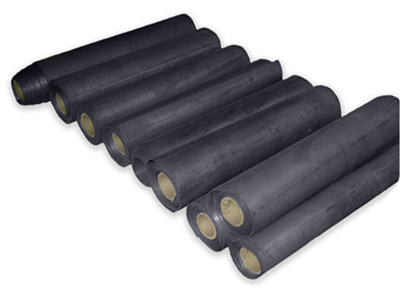
Acoustical Lead

High-density lead barrier sheet designed to reduce sound transmission in walls, ceilings, and equipment enclosures by increasing structural mass.


Key Features and Benefits


  • High-density lead sheet material – increases assembly mass to help reduce airborne sound transmission

  • Limp sheet construction – allows the material to conform to surfaces and reduce vibration-related sound paths

  • Flexible installation formats – supports integration within walls, ceilings, and mechanical enclosures

  • Cut-to-fit sheet configuration – enables installation around penetrations, framing, and irregular geometries

  • Compatible with gypsum board systems – allows direct bonding or fastening within standard wall assemblies

  • Continuous barrier layer – supports consistent acoustic separation across full assemblies

  • Durable material composition – maintains acoustic performance over time without degradation


Product Overview


Acoustic mass barrier sheets manufactured from lead are used to control sound transmission in building assemblies and industrial enclosures by increasing structural mass and limiting airborne noise transfer. These materials function as limp barriers, which helps reduce both direct sound transmission and vibration-induced sound radiation when installed within walls, ceilings, or equipment housings.


In practice, these sheets are applied as part of multi-layer acoustic systems that combine mass, absorption, and structural damping. They can be fastened directly to framing members or bonded to gypsum board to form continuous barrier layers within partitions.


This product is designed to support acoustic control as part of a broader system that includes insulation materials, air sealing, and assembly design. It is not a standalone solution and must be coordinated with overall acoustic design strategies to achieve effective sound control.


When to Use This Product


Use this product when:


  • Sound transmission between adjacent rooms must be reduced

  • Wall or ceiling assemblies require additional mass for acoustic control

  • Equipment enclosures need to limit noise breakout

  • Retrofit projects require improved sound isolation without major structural changes

  • Flexible materials are needed to accommodate complex or irregular installations


Where This Product Is Typically Found


This product is commonly used in:


  • Hospitals and healthcare facilities

  • Schools and educational buildings

  • Commercial office spaces

  • Multi-family residential buildings

  • Industrial plants and mechanical equipment enclosures


Configuration Options


  • Sheet rolls – suited for continuous barrier installation across large surfaces

  • Bonded panel systems – for integration with gypsum board assemblies

  • Cut sheets – for detailed installation around penetrations and framing

  • Custom sizes – to match specific project requirements


Installation Considerations


  • Designed for installation within wall, ceiling, or enclosure assemblies

  • Can be fastened to studs or bonded to gypsum board surfaces

  • Requires continuous coverage to maintain acoustic performance

  • Should be coordinated with insulation and sealing systems for effective results


Acoustic Control Principles


Acoustic performance using barrier materials is typically based on three coordinated functions:


  • Sound blocking – using dense barriers to limit sound transmission

  • Structural damping – reducing vibration and secondary sound radiation

  • Sound absorption – using fibrous materials to control reflected noise


This product contributes primarily to sound blocking and damping within a complete acoustic system.

MaterialModerately Noisy OfficeQuiet OfficeVery Quiet Office
Fir Plywood3.67″6.67″13.33″
Sand Plaster0.2″4.45″8.9″
Glass0.13″9.3″
Dense Concrete0.14″4.85″12.2″
Aluminum0.13″5.7″11.3″
Steel0.0045″0.2″7″
Lead0.03″0.135″0.54″